Atrioventricular node ablation


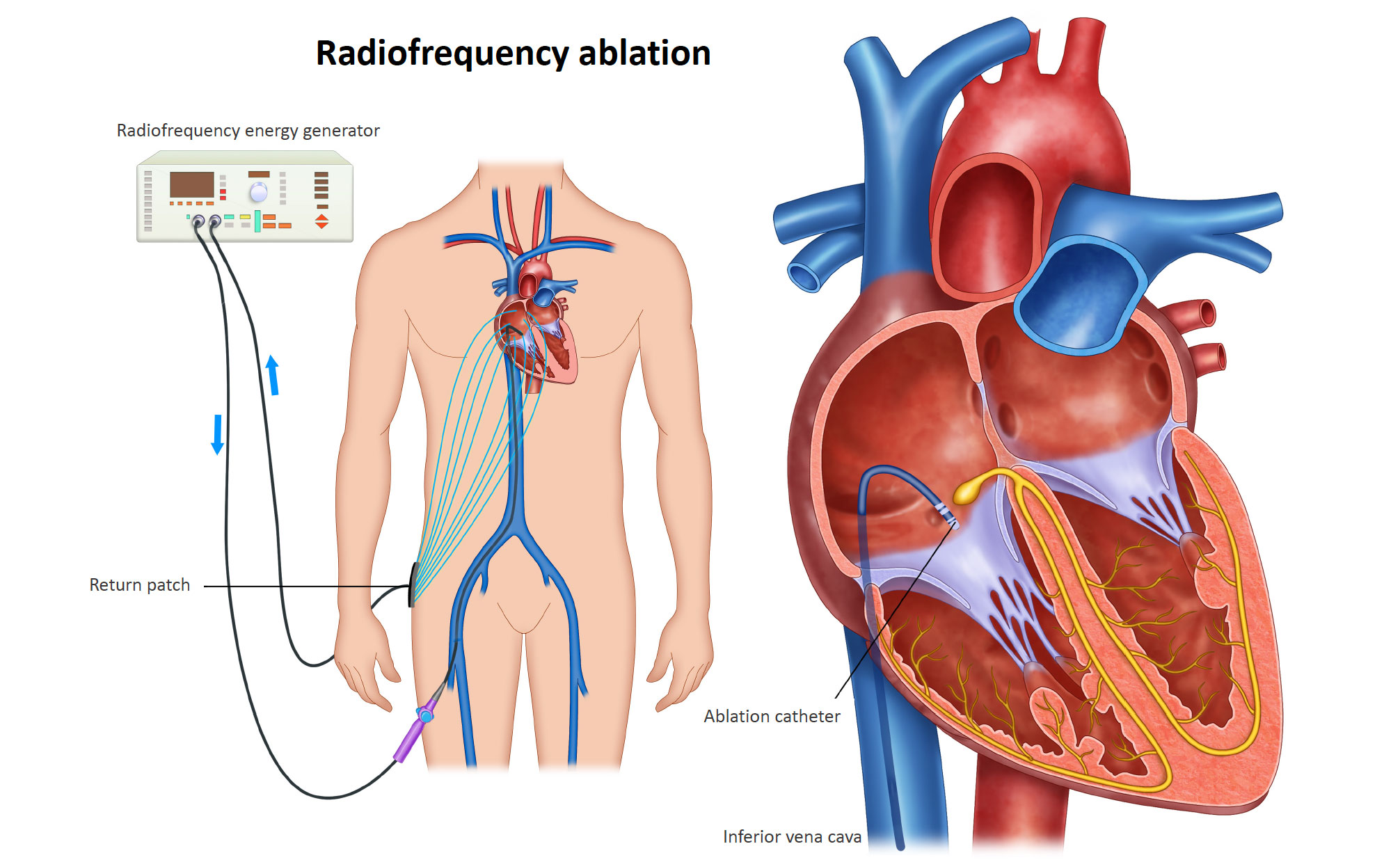

An atrioventricular (AV) node ablation is usually reserved for patients with ongoing AF who have failed to respond adequately to other treatment strategies. It benefits people with fast uncontrolled heart rates in AF despite medications or people who have severe side effects to using medications. Once exception is people with CRT pacemaker and AF who would benefit from an AV node ablation to allow for >90% pacemaker function. Patients usually have a pre-existing pacemaker, or a pacemaker implanted in view of having an AV node ablation.
The ablation procedure component is considered simple and effective. All the irregular rapid signals from the AF will no longer be able to reach the ventricle. The ventricles will now rely on the existing pacemaker to beat the heart. The heart is expected to beat regularly and allow us to rationalise your medications further. Age and comorbidities influence the management options. Procedural success is estimated at >98% and requirement for repeat procedure varies between 1-2%.
It is important to understand that the heart does not beat after an AV node ablation. The pacemaker will beat the heart for you. This is a common scenario, and your pacemaker function will be monitored regularly to ensure normal function. Pacemakers are highly reliable and sophisticated with many options to monitor you including remote monitoring.
What are the risks of having an AV node ablation?
They include but are not limited to the following.
Common risks and complications (more than 5%) include:
• Bruising bleeding at the puncture site. Bruising can extend beyond the puncture site and can take a few weeks to improve in some cases.
- Developing pacing induced cardiomyopathy / weakening of heart muscle
- No significant improvement to symptoms of shortness of breath
Uncommon risks and complications (1- 5%) include:
- Development of another arrhythmia.
- A hole is made in the heart or heart valve. This will need surgery to repair.
- Major bleeding related to the groin puncture site or injury to an artery in the groin. This (rarely) may need surgery and or blood transfusion.
- A stroke. This may cause long term disability (0.5-1%)
- Blood clot in the leg (DVT) causing pain and swelling. In rare cases part of the clot may break off and go to the lungs called pulmonary embolus.
- Skin injury from radiation. This may cause reddening of the skin.
- A higher lifetime risk from exposure to radiation.
- Chest pain / Pericarditis. This is an inflammation of the heart sack that can cause chest pain for some weeks after the procedure.
- Damage to the existing pacemaker requiring replacement or reimplantation
Rare risks and complications (less than 1%) include:
- Heart attack.
- Injury to the urinary tract if a urinary catheter is required for the procedure.
- Death because of this procedure is rare
What are the costs involved with an ablation?
If you are having this procedure in a public hospital as a public patient, the cost is covered by Medicare. If you are having this procedure in a private hospital, there is no additional out of pocket cost for our specialists. The usual hospital excess applies. Some anaesthetists have an out-of-pocket cost that we encourage you to discuss prior to your planned procedure.
How do I prepare for an ablation?
You will receive a letter with instructions and steps required prior to your procedure including, date of admission, fasting instructions, medications to stop and items to bring with you.
In General, do not eat or drink for 6 hours before your procedure. Ask your doctor about taking your usual medications. Blood thinners are usually continued for AV node ablation procedure. If you take SGLT2 medicine for heart failure or diabetes, you will need to stop taking them at least 3 days before your surgery. Leave any personal items of value such as jewellery at home.
What happens when you arrive at the hospital?
Once you arrive at the hospital for your procedure, you will usually be directed to the cardiac catheter laboratory admission area where you will be formally admitted as a hospital patient. You will be asked to change into hospital gown and put away all your valuable belongings. You will have some basic tests such as ECG, have your vitals recorded, groin shaved and have a cannula inserted into your arm to assist with the procedure. The technologists will test your pacemaker and place special sires and stickers on your chest and back.
Ablation is usually performed under sedation (in some cases general anaesthesia). The anaesthetist will speak with you about their role if required.
What happens during the procedure?
Local anaesthetic is administered at the groin which numbs the area. Three small tubes called sheaths are passed into the vein in the right groin through which catheters are inserted and gently passed up until they reach your heart. An X-ray machine guides the catheters to your heart. An ablation catheter is advanced into the atrium that applies the radiofrequency energy at the relevant site. The catheter ablation procedure can take about 30mins – 1hr or more in some cases. Rarely, In some cases, we have to access the arterial circulation to achieve success which may be performed at that time or as a staged intervention.
What happens after an ablation?
At the end of your procedure, your doctor will remove the catheters and apply pressure, followed by a dressing. You may have a little device applying pressure at the puncture site for a few hours. You’ll be watched closely in a recovery area, and depending on how you feel, you might need to rest in bed for a while. You will be admitted to the ward for observation overnight with rhythm monitoring. You may be required to lay flat on your back for about 4 hours after your procedure. People are usually discharged the next day.
What happens after discharge?
Follow up:
- An appointment will be made for you to be seen in clinic about 2 months after the procedure
- You will need to have follow up appointment with your usual pacemaker clinic
- If you do not receive a date for an appointment within 8 weeks, please call the clinic and ask to speak to the secretary
Medications:
- Continue your medications as instructed. If you are uncertain about your medications, please ring the rooms for clarification
Postoperative care:
- Avoid strenuous exercise for 1 week
- Start with gentle exercise after 1 weeks – e.g. walking.
Symptoms to monitor:
- It is not uncommon to have a bruise at the groin that extends / spreads after the ablation. This usually resolves over time without any other problems.
- Bleeding: It is rare to have severe bleeding from the puncture site once you are at home. If bleeding does occur you must: lie flat, apply pressure to the site for 10 minutes. If it continues, call an ambulance for assistance.
Please contact the rooms if you have any questions or concerns at any time.
In recommending this procedure your doctor has balanced the benefits and risks of the procedure against the benefits and risks of not proceeding. Your doctor believes there is a net benefit to you going ahead. This is a very complicated assessment.
Download the AV node ablation patient information sheet {link to AV node ablation information sheet}
Refer a Patient to Dr. Hari

Clinic Name

Clinic Name

Clinic Name

Clinic Name
Visit Dr. Hari Sugumar
Sed vulputate lacus id ligula malesuada ornare. Nullam a ornare odio, vitae bibendum mi. Suspendisse cursus diam id justo rhoncus pulvinar. Aliquam erat volutpat. Sed venenatis fermentum scelerisque.